
Welcome to the Mathematical World!
Henry Briggs (1561 – 1630)
Developer of Common Logarithms and Master of Practical Computation
Henry Briggs refined John Napier’s logarithms by introducing base-10, or common logarithms, which made calculations even more practical for scientists, navigators, and engineers. Instead of Napier’s original formulation, Briggs standardized: \[ \log_{10}(10) = 1, \quad \log_{10}(100) = 2, \quad \log_{10}(1000) = 3, \] so that powers of ten aligned directly with integer values. This made logarithms easier to use and understand, turning them into an indispensable tool for computation.
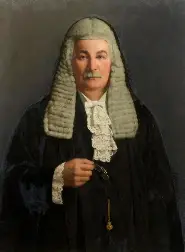
He collaborated with Napier and encouraged the refinement of logarithmic ideas, helping transform them from an invention into a universal method. His publication of Arithmetica Logarithmica (1624) provided highly accurate logarithmic tables of base-10 logarithms, which were used by astronomers, surveyors, and engineers for centuries. These tables simplified multiplication, division, powers, and roots: \[ \log_{10}(ab) = \log_{10}(a) + \log_{10}(b), \quad \sqrt{a} = 10^{\tfrac{1}{n}\log_{10}(a)}. \]
As a professor of geometry at Gresham College in London, Briggs influenced a generation of mathematicians by emphasizing clarity, efficiency, and practical application. He advocated for mathematical notation that was simple and accessible, ensuring that logarithms spread rapidly across Europe.
Briggs’ dedication exemplified the transition of mathematics from abstract theory to practical computation. His work laid important groundwork for later computational innovations, bridging the gap between theoretical insight and the applied needs of science and industry.
Facts:
- Born in Yorkshire, England.
- Collaborated with John Napier on logarithmic refinement.
- Published Arithmetica Logarithmica in 1624.
- Served as professor of geometry at Gresham College, London.
- His logarithmic tables remained in widespread use for centuries.

All rights reserved by the Mathematical Unity
Contact: +8801400044645
Email: mathematicalhorse1453@gmail.com
Our Discord Server: Mathematical Unity [Ulus Riyadiyat]